
When a Lifetime of Holding Can Mean Release Doesn’t Feel Like Relief (and that’s okay)
Updated: Jan 21
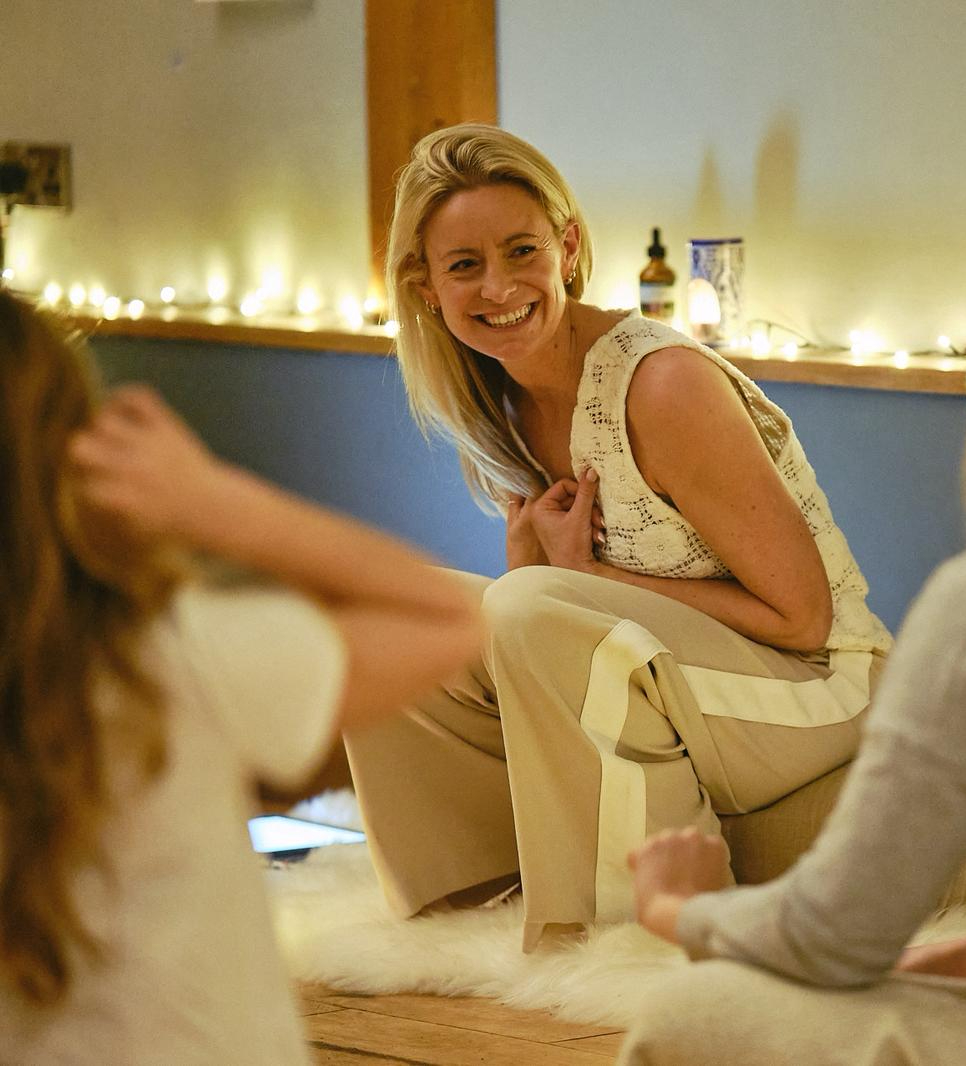
What My Body Has Been Teaching Me Over the Past Few Days at a Breathwork Retreat

Over the past few days, attending a breathwork facilitator immersive, my inner world has felt loud.
So many thoughts and ideas swimming around my head. As I return to reality, part of me wants to get on with work. Part of me wants to stay wrapped in the feeling of embodiment.
Another part wants to fix and make sense of everything that’s been stirred. I recognise this as familiar ground for me after retreats.
It feels messy. Unintegrated. Tender.
Something that’s become very clear to me is how skilled I am at holding.
During a session on our final day, we began with an activating breath. Almost immediately I could feel that I was already carrying charge. The tears came quickly. As the breath continued, the feelings and emotions intensified and something in me tightened rather than softened.
The practice transitioned from a breathe towards somatic shaking and dance but I stayed stuck. I could hear others releasing. Moving. Sounding free, joyful.And instead of joining them, I went further inward.
The tension in my core felt like a vice. Containment.
Despite knowing I was in a space that welcomes it all, in that moment, my body didn’t want the room. It didn’t want connection. It wanted the safety and familiarity of holding myself. My body chose safety and I chose isolation.
The judgement of this reaction arrived quickly.
Why can’t you let go?Why does this seem easy for everyone else?Why does joy feel unavailable to you?
When Release Feels Risky
The noise in the room felt as if it were growing louder. The walls closing in. I desperately tried to fall on my knowledge of the work to allow this movement to happen to lean in and to let something shift, but the message inside me was very clear.
The swirling fireball of feeling was too much. Letting it out felt dangerous. Like it would cause destruction. Like something toxic that couldn’t be contained once released. It felt like a storm I was protecting others from.
Later, when I looked at my body data, I noticed my heart rate had reached 130 bpm while I was sitting on the ground. Zone three. Moderate intensity. Without movement. My body was speaking.
Stepping Away
I opened my eyes. I scanned for the door, and before I could stop myself, my body was already moving.
Outside, the grass was frosty and beautiful. I could see that, but what I needed was cold. Air. Earth. Something simple and undeniable. I pressed my hands into the ground and cried. Deep, sobering, body-led crying.
I felt so alone.And I knew I had done this to myself.
I had removed myself from the very thing knowledge and history was telling me I needed.
I tried to go back in. Snotty and teary, quietly, carefully. I really tried. I slipped into the room and took a place at the back. I tried to land. I reminded myself that these spaces are meant to be places of witnessing, of being held.
But what I felt most strongly wasn’t fear or sadness. It was judgement.
You do not belong here. You are different to these people. They are free, and you are not.
This inner critical narrative is something I have come to recognise, it felt horribly familiar. I know this to be identity level conclusions drawn from stress, and here is what I am exploring from this.
If we learn to treat these experiences as evidence of who we are, rather than evidence of how our systems responds under certain conditions, we invite collapse, freeze, shut down, whatever it feels like in your body.
What I’m learning is that containment is not a failure of surrender. It’s a strategy.
My body didn’t refuse joy. It refused amplification.
When internal charge is already high, release doesn’t feel relieving. It feels risky. Not emotionally risky, structurally risky.
My body wasn’t asking will this feel better?It was asking what will break if I stop holding?
And I’m beginning to see that I am exceptionally good at holding. So good that it has become my default response, even when the conditions might allow for something else.
Isolation as Safety
Over the past few days, I’ve been sitting with whether this was a moment, or a pattern?
Whether, when feelings become intense, my system equates closeness with danger, and danger with disconnection.
Stepping away feels clean. Controlled. Contained and also spacious. Staying feels uncertain.
In the same breath, I am also noticing how easily isolation can masquerade as self-protection. How convincing it feels in the moment. And how lonely it can feel afterwards.
What I’m Learning
One thing that has landed very clearly is this: the work isn’t learning how to let go more.
The work is learning how things feel in my body, to give shape, texture and visibility to feelings and to start there, this is my truth (Thank you Nicola for guiding me through this).
It is also:
when holding is no longer adaptive, and is actually regulation - and that’s okay
how to soften without flooding - and that’s okay
how to release without losing coherence - and that’s okay
how to be witnessed without needing to be fixed even if that means risking rejecting someones good intention - and that’s okay
This work feels slower, safer, more aligned, and far less dramatic than an explosive “surrender”.
What I’m Staying With
My next steps aren’t about pushing myself into openness or forcing release.
They’re quieter than that.
Noticing earlier when my body tightens.Allowing partial release rather than all-or-nothing.Exploring safety with one person, not a room.Letting support be imperfect, quiet, and unfinished.
Mostly, I’m practising curiosity instead of judgement.
I don’t have answers yet. But perhaps I do have better questions.
Under what conditions does my body choose isolation as safety?What is it protecting me from and what does it cost?And what might be possible if holding became a choice again, rather than a reflex?
For now, I’m staying with the questions.
And that’s okay.


Comments